


This project is part of the European Climate Initiative (EUKI). EUKI is a project financing instrument by the German Federal Ministry for the Environment, Climate Action, Nature Conservation and Nuclear Safety (BMUKN). The EUKI call for project ideas is implemented by the Deutsche Gesellschaft für Internationale Zusammenarbeit (GIZ) GmbH. It is the overarching goal of the EUKI to foster climate cooperation within the European Union (EU) in order to mitigate greenhouse gas emissions. www.euki.de/en
How Balcony Solar Panels Boost EU Climate Action
by Susanne Reiff, GIZ/EUKI
Published: 19 August 2026
Cover photo: Migle Maniusyte looking from her balcony ©private
Migle Maniusyte, 39, lives in a large apartment building in Lithuania’s capital Vilnius. At first sight, all the apartments look quite similar: rows of identical balconies stretching across several storeys. But one balcony stands out. Mounted to its railing are two sleek, 1×2 metre black panels. It catches the attention of neighbours and passers-by alike. As the first balcony solar power plant in the neighbourhood, it made Migle a pioneer of clean, secure and self-generated energy.
One afternoon in September 2024, Migle Maniusyte was scrolling through the latest posts in the neighbourhood’s Facebook group. Amid updates about garbage collection, complaints about noise and discussions about untidy stairwells, one post caught her attention. Ruta Trainyte from the Lithuanian Consumers Alliance (LCA) was looking for a volunteer to have a solar power plant installed on their balcony as a pilot within the EUKI project SUNRISE – Prosumer Solar Energy.
The project helps to reduce energy consumption within the building sector, contributing to the European Green Deal’s objective to make Europe climate-neutral by 2050. Photovoltaics have great potential for both small- and large-scale applications. Panels are quite easy to install and require little maintenance.
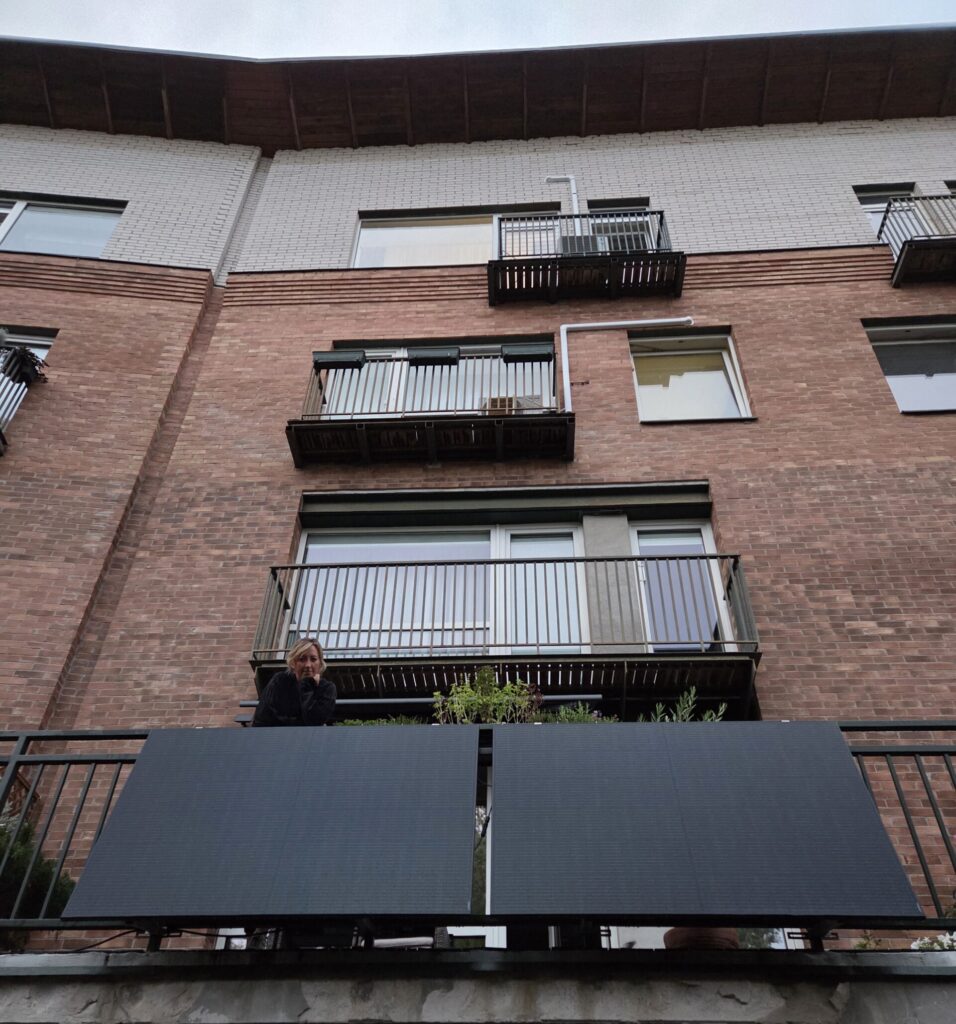
Migle Maniusyte looking from her balcony ©private
A Small Amount of Energy Independence
Migle Maniusyte had never heard of solar panels for balconies before, only for single-family houses or large commercial buildings. She was immediately attracted to the idea of producing her own energy on her balcony next to her tiny herb garden. “We live in uncertain times. Lithuania shares a border with Russia and the Russian war in Ukraine is not far away,” she says. “Even a small amount of energy independence makes me feel a bit more in control. In addition, solar energy is so much more climate-friendly than oil or gas.”
Energy security and clean energy are a concern not only to Migle, but to many people in Lithuania. The country is committed to achieving more energy independence and pushing the green energy transition at the same time. The SUNRISE – Prosumer Solar Energy project supported these ambitions from 2022 to 2025, with a focus on climate action. It put consumers at the heart of the low-carbon transition by unlocking private investment in renewable energies. Citizens were encouraged to become prosumers, creating financial, environmental and security benefits for households and society at large.
On sunny days, Migle Maniusyte’s small power plant generates four to five kilowatt-hours of energy. That’s more than enough to run the dishwasher and the washing machine and charge her electronic devices. “Since I have had the balcony plant, I have changed my habits,” she says. An app on her mobile phone tells her how much energy is currently available and she plans her energy use accordingly, if possible. This allows her to reduce her grid energy consumption by up to 50 per cent.
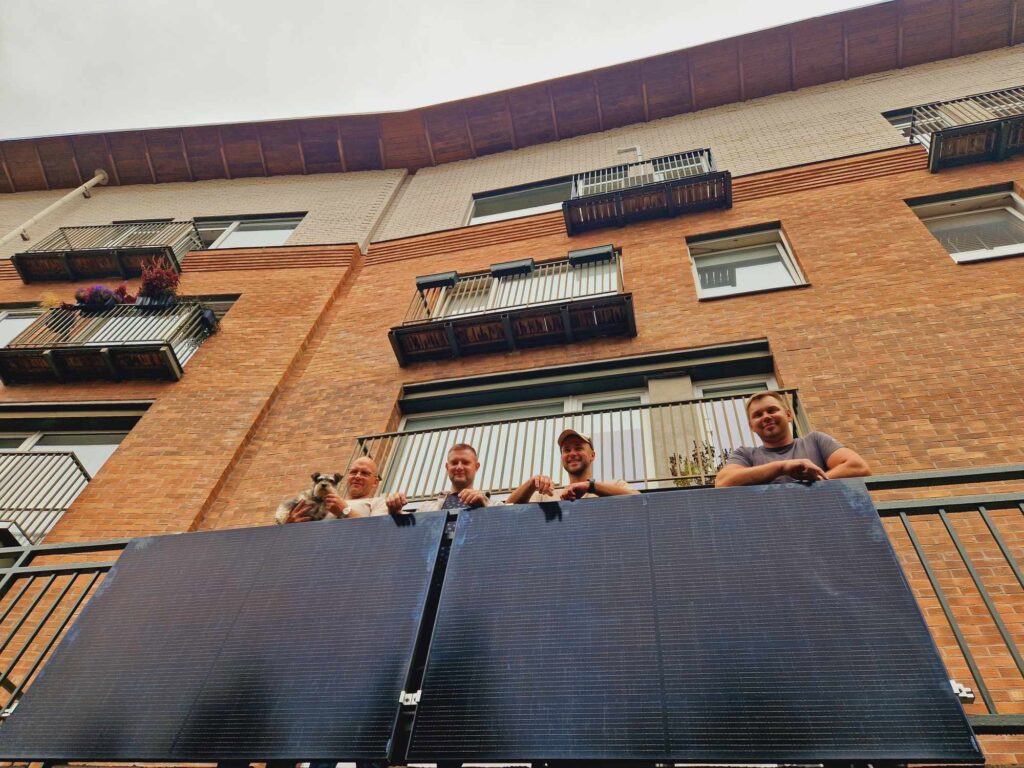
The power plant installed on Migle Maniusyte’s balcony was the first of its kind in the neighbourhood. © private
Reducing Energy Bills was Never a Main Concern, but it is an Additional Benefit
The idea of a balcony power plant became even more attractive to Migle Maniusyte when she found out that her participation in the pilot involved much more than the installation of the solar panels. She attended information events about green energy, how the panels work and which benefits she could expect from the installation. ALCO had asked her to share her experience and so she got involved in advocacy activities and became part of the ALCO network, which addresses numerous consumer issues – always with a focus on sustainable solutions.
Being a pioneer was not without its concerns, however. Migle Maniusyte wondered how complex the installation would be. She also worried about her neighbours’ reactions. Would they object? After all, the panel would change the appearance of the building. And would she have to deal with a lot of paperwork? In the end, her concerns proved unfounded. The installation was straightforward and the reactions overwhelmingly positive. Curious neighbours stopped to ask questions about the technology, the installation process and the electricity it produced. Inspired by her example, four neighbours have now installed balcony solar panels of their own. “My example showed them that solar energy production on our balconies is a good investment,” she says.
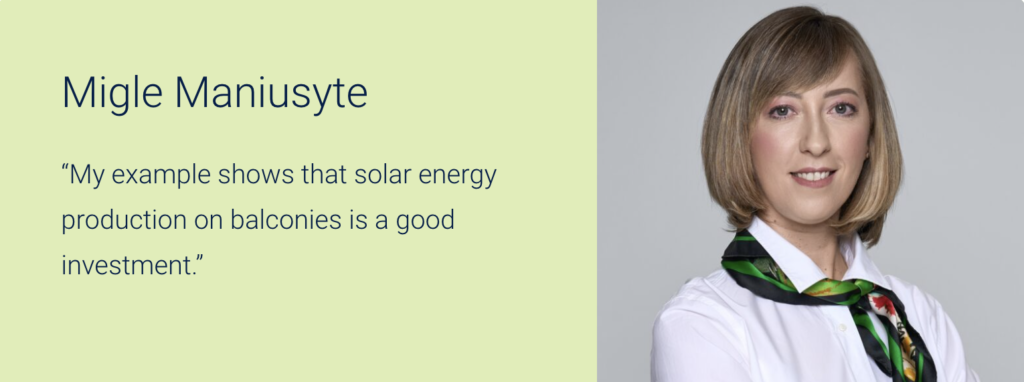
Today, two years after the installation, Migle Maniusyte looks back with satisfaction: “Replying to that Facebook post was absolutely the right decision. I was fortunate to receive the first panel in the neighbourhood, but even more importantly, I was able to inspire others.”
A technology that seemed unusual at first has begun to slowly spread through the neighbourhoods of Vilnius and other European cities. Perhaps, in a few years’ time, balcony solar power plants will no longer be the exception but part of everyday urban life. SUN BOX, a follow-up EUKI project of SUNRISE, is helping to make this a reality by removing legal, financial and technical barriers that prevent residents in multi-family buildings from using renewable energy.
Migle’s transformation into a renewable energy producer shows that the green transition towards our shared EU climate goals begins at home in Lithuania, Germany, Spain or Bulgaria, and that thousands of small initiatives can add up to lasting change.
Related project
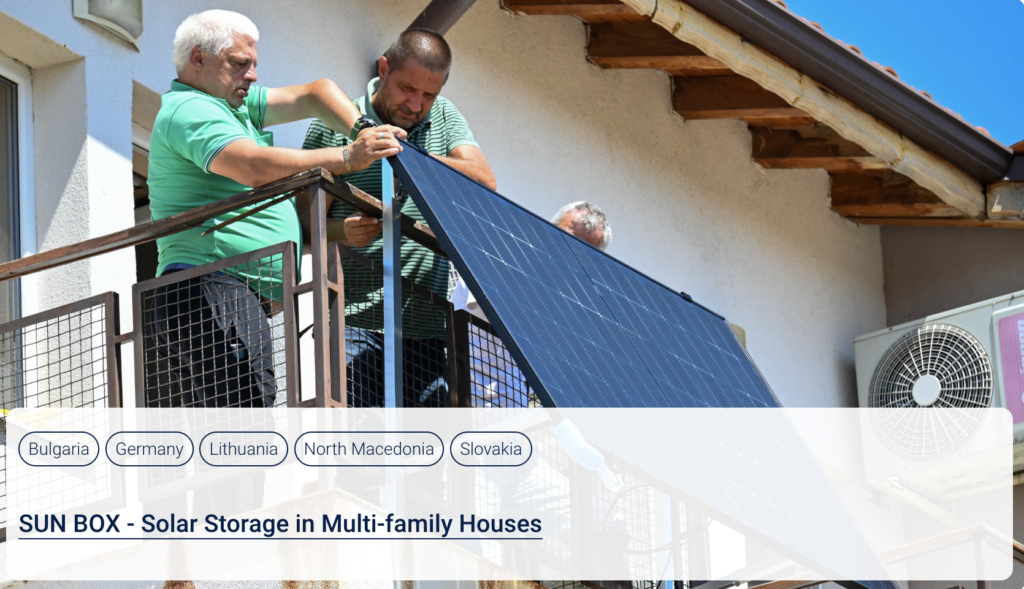
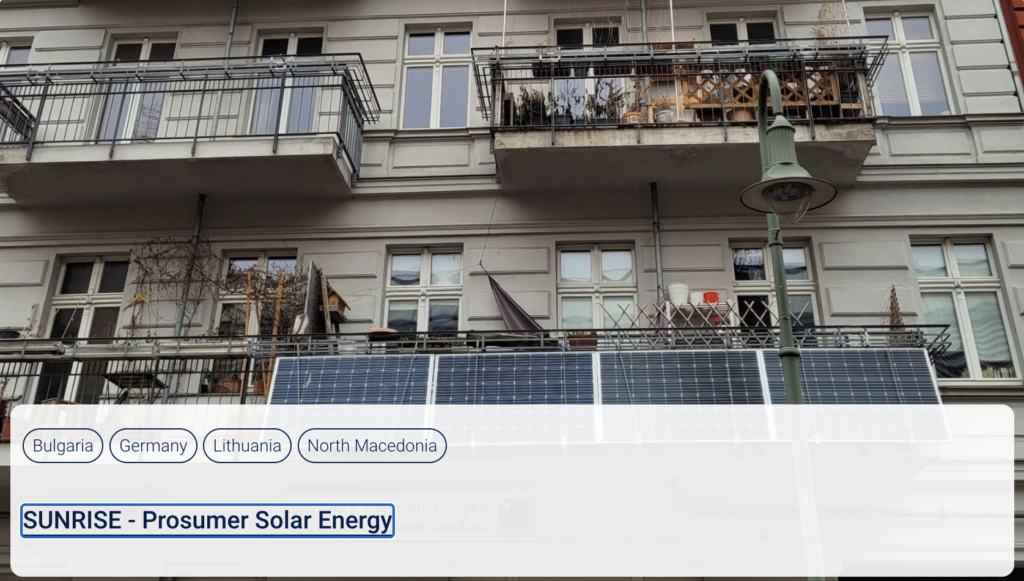
Resource EUKI: How Balcony Solar Panels Boost EU Climate Action
As part of the SUN BOX project, one of our first technical activities was to identify battery storage solutions suitable for plug-in balcony photovoltaic (PV) systems and applicable in our pilot countries: Bulgaria, Lithuania and North Macedonia.
To support this process, the project team conducted a comprehensive market assessment covering more than 50 battery storage products currently available on the European market. The evaluation considered technical, economic and practical criteria, including storage capacity, purchase price, expandability, safety features, weather resistance, market availability, compatibility with balcony PV systems and ease of installation.
A particular focus was placed on solutions that can realistically be deployed in multi-apartment buildings. The availability of products in the participating countries, shipping options, warranty conditions and the overall user experience were therefore considered alongside technical specifications.
From More Than 50 Products to Six Finalists
The market analysis identified a large number of technically suitable systems. However, many products were excluded because of limited market availability, uncertain delivery conditions, missing product information, higher costs, lower maturity, or limited suitability for the project objectives.
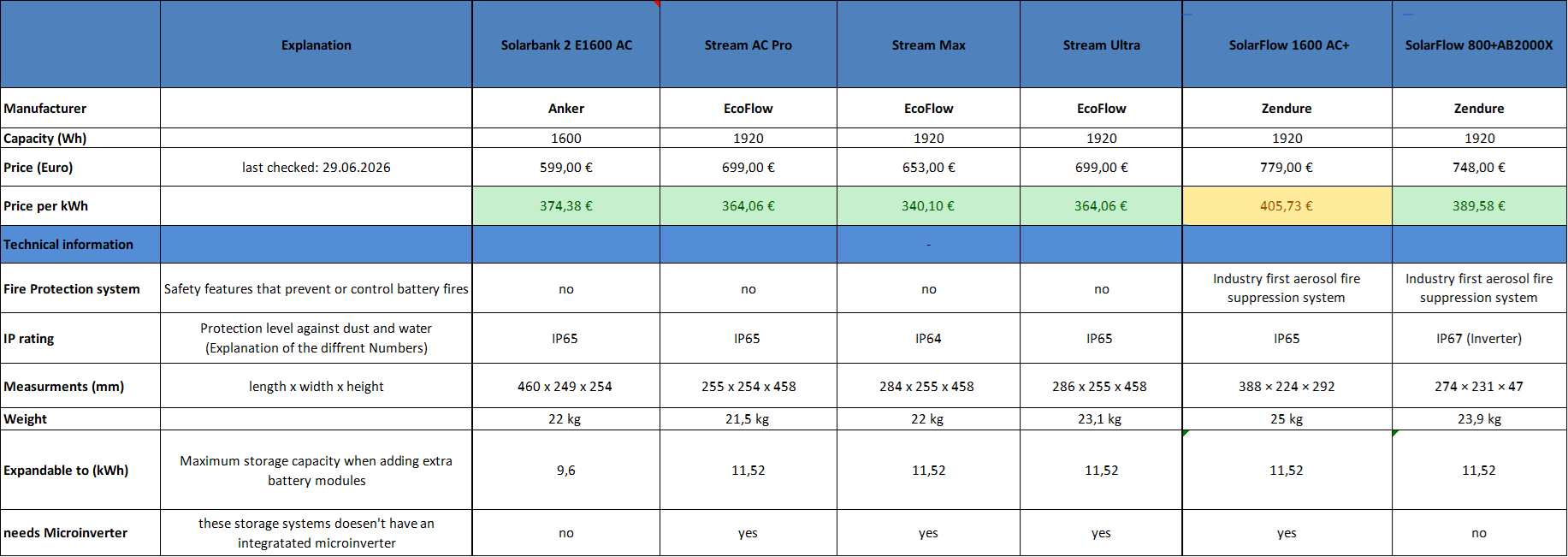
Based on the assessment, six battery storage solutions were selected for further consideration within the SUN BOX project:
- Anker Solarbank 2 E1600 AC
- EcoFlow Stream AC Pro
- EcoFlow Stream Max
- EcoFlow Stream Ultra
- Zendure SolarFlow 1600 AC+
- Zendure SolarFlow 800 + AB2000X
These systems represent some of the most mature and widely available balcony PV storage solutions currently offered on the European market.
Key Findings
The selected systems provide storage capacities between 1.6 kWh and 1.92 kWh, making them suitable for typical balcony PV installations. Prices ranged from approximately €599 to €779 at the time of evaluation, resulting in storage costs between approximately €340 and €406 per kWh.
All selected systems are designed for outdoor installation and offer high protection against dust and water ingress (IP64 to IP67). Most systems can be expanded to storage capacities exceeding 11 kWh, providing flexibility for future household energy needs. An additional advantage is the integration of smart energy management features and compatibility with modern smart-meter solutions, enabling more efficient use of locally generated solar electricity.
Supporting the Upcoming Pilot Installations
The selected battery storage systems will form the basis for the next phase of the SUN BOX project. Over the coming months, the project partners will continue to assess market availability, logistics, installation requirements and user acceptance in the participating countries. The results will support the selection of suitable systems for demonstration activities and help identify practical pathways for increasing self-consumption of solar energy in multi-family residential buildings.
Disclaimer: The systems presented in this overview were selected solely for evaluation within the SUN BOX project. Their inclusion does not constitute a commercial recommendation, endorsement or advertisement. The assessment was conducted according to project-specific technical and practical criteria.
Authors: M. Sc. Christoph Johann and Martin Liske, DGS - Deutsche Gesellschaft für Sonnenenergie, www.dgs-berlin.de
(Reflections from Intersolar 2026)
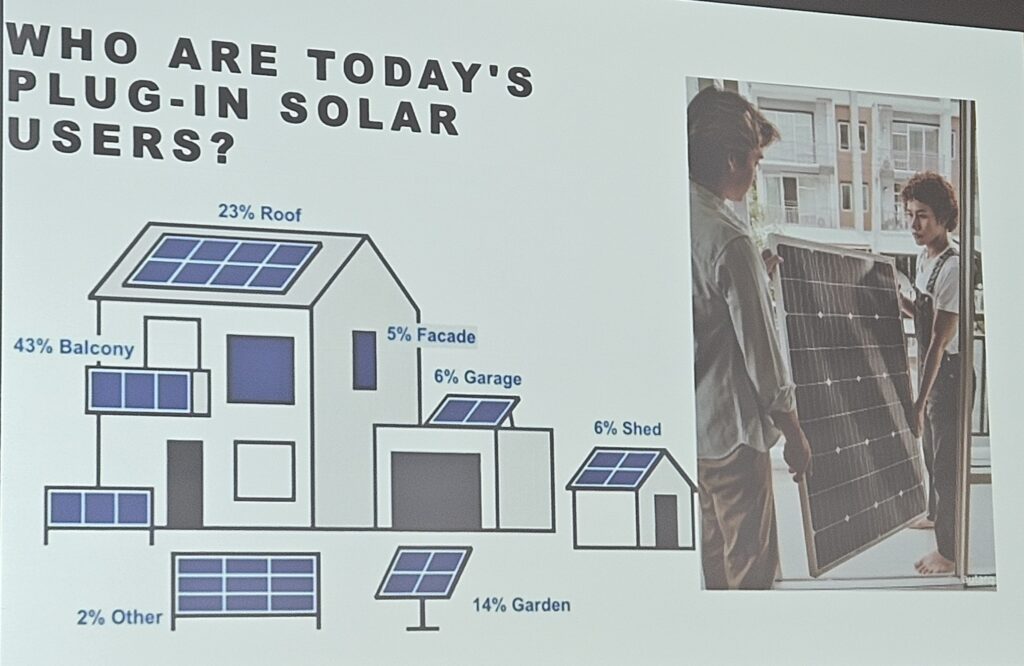
At the Plug-In Solar Conference 2026, held at Intersolar Munich, one message stood out clearly: the next stage of Europes solar transition cannot be designed only for roofs, homeowners and single-family houses. It must also work for balconies, tenants and residents of multi-family apartment buildings.
This is precisely the challenge addressed by SUN BOX, a project financed by the European Climate Initiative (EUKI). The project focuses on plug-in solar and energy storage solutions for multi-apartment buildings, with activities unfolding across Eastern Europe, including Bulgaria, North Macedonia and Lithuania.
Its central concern is practical and social at the same time: how can households that do not own a roof still become active participants in the renewable energy transition?
The scale of this question is enormous. Across Europe, tens of millions of people live in apartment buildings. Many of these buildings are waiting for renovation, and in many cases deep renovation may still be years away.
Why plug-in?
Rooftop solar can be an important solution, but it is not always simple. Homeowners associations need to agree. Roof space may be limited. Administrative procedures can be slow.
In a typical multi-family building, even a 25 kW rooftop PV system may translate into only 300 - 400 W per flat. By contrast, a single balcony installation can already provide around 800 W or more, and a building with many suitable balconies can host a significant amount of decentralised solar capacity. Our calculations show that 25-30 kW of solar per MFAB can be easily achievable.
This does not mean that balcony solar replaces rooftop PV, deep renovation or energy communities. It means that plug-in solar can become an additional, faster and more empowering route into the energy transition. For residents who cannot wait ten years for a major renovation, who do not yet have a functioning local energy community, or who otherwise remain passive consumers of green electricity, balcony PV offers a more direct way to generate part of their own electricity.
The debate is not new. The 2025 Plug-In Solar Conference (the first of its kind) moved plug-in from a niche debate to a serious European agenda.
In Germany, adapted regulation and standardisation helped create a dynamic market with millions of devices sold and installed. One should also note growing interest in other countries, including Austria, Lithuania, Belgium, France and parts of the United States. For the first time, plug-in solar creates the possibility for virtually every household to generate sustainable electricity, reduce energy costs and contribute to the energy transition.
Yet the 2026 discussion, gathering enthusiasts of plug-in solar at the Intersolar in Munich, also made clear that technology is no longer the main bottleneck. At the fair this year, manufacturers showcased a wide range of mature plug-in solar and storage products that could be deployed at scale. In many cases, the products are no longer provided separately. The plug-in facility and storage solutions are combined in a nice single-package offer.
Technology is, finally, ready. The harder question is whether regulation, building management practices and consumer-facing procedures are ready for that deployment.
Bottlenecks remain
This is where the realities of multi-apartment buildings become decisive. A plug-in solar system, with or without storage, is technically simple, but its installation takes place in a complex social and legal environment. Metering infrastructure may be outside the apartment. Wi-Fi or Bluetooth connectivity cannot always be assumed. Landlords, homeowners associations and building administrators may need to be involved. In some countries, regulatory uncertainty still discourages residents from installing even non-damaging balcony systems - ie. systems, which are completely removable from the balcony without leaving a trace, if need be.
One real-life example presented during the conference captured the problem. A balcony solar installation was removed after a neighbour complained to the building administrator about a suspicious unidentified object attached to the balcony. The administrator responded with an official letter threatening legal action and demanding removal. The unidentified object was, in fact, a solar panel. The resident removed the system to avoid conflict.
The lesson is sharp. The barrier was not technical feasibility. It was lack of clarity, awareness and established procedures. For SUN BOX, this is exactly where the work begins: bridging technical innovation with everyday housing realities, and developing approaches that are practical, scalable and user-oriented.
In Munich, harmonisation of rules and regulations was identified as key to creating a free and fair market for plug-in solar technology. The conference also highlighted the need for quality and safety standards, simpler administrative processes, grid integration and adequate incentives.
A tool for social inclusion
For Eastern Europe, the topic is particularly relevant. Multi-family apartment buildings form a large part of the housing stock, and many residents face high energy costs, limited control over renovation decisions and slow access to decentralised renewable energy solutions. Balcony solar with storage is not a silver bullet, but it can become a practical entry point into energy democracy: visible, understandable and close to the household.
This is also why plug-in solar should be discussed not only as a technology, but as a consumer and social inclusion issue. "If Europe wants a democratic solar transition, it needs solutions that work for tenants, apartment owners and energy-poor households not only for those who already own a detached house and a suitable roof", said Kęstutis Kupšys, Vice-President of the Lithuanian Consumers Alliance, one of the SUN BOX consortium partners.
The Plug-In Solar Conference 2026 showed that momentum is building. The technology exists, and the demand grows. Even political attention is increasing. The next step is to make balcony solar work in the places where many Europeans actually live: existing multi-apartment buildings, with real administrators, real neighbours, real electricity systems and real legal uncertainty. Adding storage leads to more benefits; hence, it should be encouraged too.
SUN BOX takes this challenge seriously. By combining plug-in solar, storage, consumer engagement and practical work in multi-family housing, the project contributes to a more inclusive and decentralised energy transition. Balcony solar is not just about adding panels to railings; it is about opening a new door into the renewable energy transition for households that have too often been left outside.
**
Author: Kęstutis Kupšys, Vice-President of the Lithuanian Consumers Alliance, and Alternate Member of the European Economic and Social Committee, Contact: Kestutis.Kupsys@lvoa.lt
On 11 February 2026, in Vilnius, partners from the SUN BOX project and the ComActivate project exchanged experience and joined forces around a shared goal – making renewable energy truly accessible for households affected by energy poverty. They presented proven approaches for cooperation with homeowners’ associations, and participants also visited successfully renovated residential buildings on site.
The focus was clear:
☀️ balcony photovoltaic installations with battery energy storage systems
🏢 solutions for multi-apartment buildings
🤝 community-based models and active citizen participation
🏛️ One-Stop-Shop centers as a practical support instrument
SUN BOX is not just a project, but a real opportunity for more families to take control of their energy costs. Through the pilot installation of 200 balcony photovoltaic systems in each participating country – Lithuania, Bulgaria, and North Macedonia – it demonstrates that small solutions can have a big impact: lower bills, greater security, and increased independence. Because sometimes change starts on a balcony, but is felt throughout the entire home.
Yes, the regulatory framework still presents challenges for the widespread deployment of renewables in multi-apartment buildings. However, the dialogue between institutions, experts, and civil society organizations proves that there is willingness for change. And it is precisely such meetings that lay the foundation for sustainable solutions.
As part of the program, participants visited the municipal One-Stop-Shop center Atnaujinkime miestą – an example of how local authorities can actively support residential building renovation and work hand in hand with homeowners’ associations.
Among the inspiring speakers in the panel discussions were Airidas Daukšas (Deputy Minister of Energy of Lithuania) and Christian Ofenheusle (Bundesverband Steckersolar e.V.). Assya Dobrudzhalieva shared the organization’s experience in the panel “Integrating renewable energy in multi-apartment buildings: challenges and opportunities for plug-in photovoltaic systems”.
SUN BOX, funded by the European Climate Initiative (European Climate Initiative (EUKI)), together with the ComActivate project under the LIFE Programme (LIFE Programme), demonstrates that when we combine energy efficiency, decentralized generation, and strong local communities, we can truly reduce energy poverty in Europe.
💛 Because the energy transition starts on the balcony. And reaches every household.


Promoting solar systems with storage in Bulgaria, Lithuania and North Macedonia to advance decentralized renewable energy in multi-family buildings.
Background
Multi-family buildings in Bulgaria, Lithuania and North Macedonia play a key role in national and European climate strategies, yet they remain largely excluded from renewable energy use.
All three countries aim to expand renewable energy and self-consumption:
Bulgaria’s National Energy and Climate Plan and Renewable Energy Act seek to increase renewable energy but provide little support for multi-family buildings.
Lithuania’s National Energy Independence Strategy, Prosumers Support Program and Climate Change Management Agenda promote solar energy, storage solutions and household-level resilience.
North Macedonia’s energy and climate plans, including its Strategy for Energy Development until 2040 and its Enhanced Nationally Determined Contribution, highlight the expansion of renewable energy and prosumer participation.
However, regulatory barriers, missing energy-sharing frameworks and limited grid integration options restrict citizens in multi-family buildings from becoming part of the renewable energy transition.
Project
The project removes legal, financial and technical barriers that prevent residents in multi-family buildings from using renewable energy. The team introduces plug-in photovoltaic systems with battery storage, enabling households to increase self-consumption, store surplus energy and secure backup power during outages. Together with local partners, the project develops technical standards for storage solutions, carries out pilot installations and equips 200 buildings per country with balcony solar systems.
Through workshops, webinars and media outreach, the team informs tenants, homeowners, installers and policymakers about safe and efficient use of plug-in systems. The project also works closely with decision-makers to improve regulations, promote energy sharing and simplify grid integration processes. By demonstrating practical solutions, SUN BOX strengthens acceptance, increases adoption of small-scale solar systems and supports the shift toward decentralized renewable energy in all three countries.

Last update: June 2026
February 2025: North Macedonia
The SUNRISE project, funded under the European Climate Initiative (EUKI), is a strategic initiative aimed at accelerating the adoption of renewable energy solutions, particularly solar energy, in multi-family residential buildings across North Macedonia. Running from 01.11.2022 to 30.04.2025, the project is led by Initiative for Housing in Eastern Europe (IWO) in partnership with Habitat Bulgaria, Lithuanian Consumers Alliance (LCA), Habitat for Humanity International (HFHI), German Solar Energy Company (DGS), and Habitat Macedonia.
The project's primary goal is to eliminate barriers preventing households in multi-family residential buildings from adopting renewable energy, focusing on solar energy. Key tools for achieving this include the promotion of plug-in photovoltaic (PV) systems and the introduction of net metering for annual energy production and consumption. This aligns with the EU’s climate goals, specifically a 55% reduction in greenhouse gas emissions by 2030 and carbon neutrality by 2050. In light of rising energy prices, the project is especially relevant in promoting renewable energy solutions at the household level.
The project also aims to assess the needs and demands of homeowner associations (HOAs) in North Macedonia for implementing small-scale renewable energy measures, to understand financial barriers, and identify key challenges and support mechanisms. ITM Consulting, contracted for this assessment, conducted surveys, interviews, and focus groups with HOA representatives from October to December 2024. The findings highlight significant potential for renewable energy adoption, albeit constrained by high upfront costs, lack of information, and fragmented support systems.
The assessment reveals that financial support, public education, and streamlined legal processes are key to overcoming these barriers. The recommended strategies include increasing public awareness, simplifying legal frameworks, enhancing financial incentives, and ensuring long-term maintenance support. These measures will facilitate a nationwide shift towards sustainable, renewable energy solutions, promoting energy independence and reducing greenhouse gas emissions in North Macedonia.
February 2025: Bulgaria
This report presents the key findings, conclusions, and recommendations based on the assessment of awareness, financial readiness, and willingness of households from two multifamily residential buildings to invest in renewable energy (RE) solutions. The buildings are situated two different neighbourhoods. Zaharna Fabrika a neighbourhood with lower-income households and fewer completed energy efficiency renovations, exhibits greater financial constraints and a stronger need for external financial support. In contrast, Knyazhevo, characterized by higher-income residents and more advanced energy efficiency measures, demonstrates higher investment potential but still faces barriers related to financial planning and skepticism. The assessment is based on survey responses and focus group discussions, highlighting the financial barriers, information deficits, and preferred financing mechanisms for RE adoption.
Key Findings
• Awareness and Information Gaps: A significant portion of respondents lack knowledge about available financing programs and RE solutions, particularly in Zaharna Fabrika. Knyazhevo respondents exhibit higher awareness but still require detailed financial projections.
• Financial Readiness and Investment Willingness: Most households are prepared to invest in RE, with the majority willing to allocate between 501 - 1000 BGN. Higher investment thresholds are observed in Knyazhevo, while Zaharna Fabrika exhibits financial constraints, requiring external financial support.
• Preferred Financing Models: Respondents favor a combination of grants, preferential loans, and flexible financing mechanisms. HOA-led collective loans have strong support, particularly in Zaharna Fabrika, as they reduce individual financial burdens and provide structured access to RE financing.
• Barriers to RE Implementation: Key obstacles include lack of trust among neighbors, unclear benefit-sharing mechanisms, skepticism regarding RE benefits, and administrative complexities.
• Potential for Excess Energy Utilization: Households express strong willingness to contribute surplus energy to the grid, but many are unaware of the potential for financial returns through energy sales or storage solutions.
March 2025: Lithuania
Lithuania has committed and already made significant progress in achieving a climate-neutral economy by 2050, with a strong emphasis on transitioning to renewable energy sources (RES). However, the study highlights some legal and regulatory barriers hindering more rapid and large-scale implementation of renewable energy measures in Lithuania.
Multi-family buildings, representing almost 50% of dwellings in Lithuania, present both opportunities and challenges for implementing smaller RE measures. Most of these buildings need energy renovations creating a need for energy-efficiency upgrades and smaller RE solutions like solar water heaters or heat pumps. However, decision-making for energy renovations in multi-family buildings is complicated while reaching consensus among multiple owners and navigating legal requirements can be challenging.
Lithuanian homeowners may have existing and future demands for smaller RE measures, driven by the desire for lower energy bills, reduced environmental impact, and increased property value. Factors deterring homeowners from adopting RE include economic factors, lack of accessible information, and policy and regulatory challenges. Upfront costs associated with renewable energy technologies can be prohibitive, and there is a lack of awareness regarding potential financial incentives and subsidies. Complex permitting processes and grid infrastructure limitations further complicate project implementation.
Interview results indicate that while general awareness of RES is growing, specific knowledge of technologies, technical parameters, and cost-effectiveness is lacking. Targeted information and training are needed, particularly for HOA chairs, who can then disseminate information to homeowners. Financial benefits are the primary motivator for homeowners to invest in RES, especially reducing energy costs. However, the relatively low cost of electricity for general building needs can make it difficult to convince residents of the value of such investments without state support. State support is crucial but must be easily accessible with a simple procedure.
Addressing these challenges requires a comprehensive approach involving grid infrastructure improvements, streamlined administrative procedures, clear and consistent policies, and effective communication and collaboration among stakeholders.
This project is part of the European Climate Initiative (EUKI). EUKI is a project funding instrument of the German Federal Ministry for Economic Affairs and Climate Protection (BMWK). The EUKI competition for project ideas is run by the German Society for International Cooperation (GIZ). The overall objective of EUKI is to promote climate cooperation within the European Union (EU) in order to reduce greenhouse gas emissions. www.euki.de/en
Author: Rūta TRAINYTĖ, Vartotojų aljansas (Lithuanian Consumers Alliance)
An increasing number of apartment residents and homeowners in Lithuania are adopting plug-in solar power (photovoltaic, PV) systems. These systems can be easily attached to balconies and removed without requiring any permits or approvals. Solar PV systems with a capacity of 0.8 kW are becoming more common on apartment balconies, allowing both owners and tenants to generate clean energy and lower their electricity costs.
According to Energijos Skirstymo Operatorius (ESO), Lithuania’s energy distribution network operator, around 340 small solar power systems of up to 0.8 kW were registered last autumn. Experts estimate that nearly 600,000 households in Lithuania could benefit from installing these systems.
Easier Installation Process
Solar installers are noticing a growing interest in small solar power plants. With the installation process simplified last autumn, even more people are expected to install these systems this year. Now, approval is only required for houses with cultural heritage or special status, and residents no longer need permission from their neighbors.
As a result, apartment dwellers can now install small solar power systems more quickly and easily, without dealing with complex bureaucracy. This has further encouraged the shift towards solar energy and increased the use of renewable power sources.
In 2023, around 10 consumers per month applied to ESO to notify them about the installation of a small solar power system. By the end of 2024, this number had grown to 40 notifications per month. The main advantage of these small systems is their flexibility—they can be mounted on a balcony, rooftop, or placed in a yard. The system connects directly to a power socket, allowing users to start using the electricity generated by the sun immediately after plugging the PV system into the socket.

Financial Support Available
The Lithuanian Government, through the Environmental Project Management Agency, offers financial assistance for installing small solar power systems on balconies. This support covers the cost of purchasing and installing the system but does not currently include energy storage solutions such as batteries. Nonetheless, this financial aid reduces installation costs and motivates more people to become energy independent—a goal that is becoming increasingly important both on a personal and national level.
At present, a 0.8 kW solar power system in Lithuania costs around €500, with state compensation covering approximately €200. Annual electricity savings of between €100 and €140 are possible, meaning the system typically pays for itself within two to three years.
According to a business news portal "Verslo Žinios", Vilnius region leads in the number of small solar power installations, with 95 registered systems. Other active regions include Panevėžys (91 systems), Kaunas (63), Klaipėda (56), and Šiauliai (34).
Despite available financial support, the Environmental Project Management Agency notes that uptake has been slow. Around 50 applications for financial assistance were registered last autumn, with just over €2,000 in support granted. The slow adoption could be due to the already low cost of installation or a lack of awareness about the benefits of balcony solar power systems and the available support programs.

A Boom in Small Solar Power Systems Expected
Energy experts predict that small solar power systems will see a rapid increase in Lithuania over the next few years.
Mr Karolis Bužinskas, Director of "Elektra man" UAB, which operates under the GreenUp brand, has observed a sharp rise in consumer interest. His company, in collaboration with the Lithuanian Consumer Alliance and the EUKI-project SUNRISE, has already installed two pilot projects in Vilnius and plans to install at least 10 more starting in March. Bužinskas stated in an interview with the Lithuanian press, “Two or three years ago, we thought this was unrealistic and wouldn’t happen in Lithuania. Now we are among its biggest advocates. The growing interest has exceeded our expectations.”
Lithuania appears to be following the trend seen in other countries where solar power adoption has been widespread. In Germany, for example, private households have installed 16 GW of solar power, with around 200 MW coming from balcony solar installations. Experts predict that Lithuania will eventually reach a similar proportion. If Lithuania followed Germany’s trend, the country should already have at least 10 MW of balcony solar installations. However, at present, the installed capacity is roughly 30 times lower.
How Can More People Be Encouraged to Adopt Solar Power?
These compact yet efficient systems play a key role in promoting energy independence and reducing reliance on external energy providers.
However, to maximize the benefits of solar energy, energy storage solutions are essential. Storage systems allow excess energy to be saved and used during cloudy days or at night.
Currently, energy storage systems vary in price, starting at around €500. To further encourage people to install small solar power systems, financial support for energy storage should also be considered. In Berlin, for example, the local government provides a €500 grant per household for setting up an energy storage system. Lithuania could implement a similar program, as long as the application process remains simple.
Another promising approach is incorporating small solar power systems into apartment buildings undergoing renovation.
Lithuania is rapidly moving towards a sustainable and energy-independent future. Small solar power systems are becoming increasingly appealing to consumers and are contributing to the country’s transition to a new energy system. These developments do not only help reduce electricity costs but also promote responsible environmental practices. In the coming years, it is expected that more and more Lithuanians will install small solar power systems on their balconies, providing cleaner energy and contributing to a more sustainable future.
Want to learn more? Visit our project website: https://www.euki.de/en/euki-projects/sunrise-prosumer-solar-energy/ or watch a video "Six steps to your own balcony PV" here:
This project is part of the European Climate Initiative (EUKI). EUKI is a project funding instrument of the German Federal Ministry for Economic Affairs and Climate Protection (BMWK). The EUKI competition for project ideas is run by the German Society for International Cooperation (GIZ). The overall objective of EUKI is to promote climate cooperation within the European Union (EU) in order to reduce greenhouse gas emissions. www.euki.de/en
Photo credit: Lithuanian Consumers Alliance
From October 7 to October 10, 2024, the SUNRISE project brought together its partners for a productive and inspiring regular project meeting in Sofia, Bulgaria. Hosted at the Rosslyn Central Park Hotel, this gathering facilitated collaboration, progress assessment, and planning for future initiatives.
Tuesday, October 8, 2024 : Presentations and Planning
The day commenced with a welcome coffee and opening remarks in the “Dimyat” Hall. Hosts HFH Bulgaria and the Housing Initiative for Eastern Europe (IWO) set the tone with a brief introduction and agenda presentation.
Highlights of the Day:
- HOAs and Renewable Energy: HFH International captivated the room with a presentation on the financial potential of homeowner associations (HOAs) in adopting smaller renewable energy measures. This discussion planted seeds for creative strategies.
- Pilots in Focus: HFH Bulgaria, HFH Macedonia, and Lithuanian Consumers Alliance: Country teams shared challenges, triumphs, and lessons learned, offering a rich mosaic of experiences.
- Hurdles and Hope: From technical barriers to community engagement successes, each narrative emphasized progress and perseverance.
The day concluded with a journey into Sofia’s spirit—a guided walking tour unveiling its architectural gems.
Wednesday, October 9, 2024: Site Visits and Cultural Exploration
The day featured excursions showcasing practical outcomes and Bulgaria’s rich heritage.
- Visit to Dupnitsa Municipality: Participants met the mayor of Dupnitsa Parvan Dangov and toured six social housing apartments equipped with Plug-in PV systems on their balconies.
- Rila Monastery Tour: After lunch attendees explored the historic monastery — a UNESCO World Heritage Site.
Reflection and Future Steps
The meeting in Sofia reaffirmed the SUNRISE project’s commitment to sustainable energy solutions and transnational collaboration. By combining presentations, site visits, and cultural engagement, it created a dynamic platform for innovation and partnership.
Stay tuned for updates on upcoming SUNRISE initiatives and achievements!
This project is part of the European Climate Initiative (EUKI). EUKI is a project funding instrument of the German Federal Ministry for Economic Affairs and Climate Protection (BMWK). The EUKI competition for project ideas is run by the German Society for International Cooperation (GIZ). The overall objective of EUKI is to promote climate cooperation within the European Union (EU) in order to reduce greenhouse gas emissions. www.euki.de/en
Author: Rūta Trainytė, Lithuanian Consumers Alliance
Lithuania is a benchmark case in Europe, regarding a solar and wind energy adoption breakthrough among the population. The number of generating consumers ('prosumers') has been doubling for several years in a row since 2019. The country counts around 100.000 households that are self-reliant in renewable energy. However, with 1.2 million households in Lithuania, there is still room for growth.
Lithuania is presented as a good case study at various events and conferences because both businesses and the legal system have adapted to the need for consumers to become independent and to power their homes, especially in the face of possible military threats and climate crises.
Business has seen a good niche in photovoltaics (PV), and politicians have put energy independence at the top of the priority list. Obviously, one of the best ways to achieve this is by allowing citizens to generate their own energy. Opening up the electricity grid to generating consumers has been a decisive factor in the boom in renewable energy generation.
The myths are busted
Fifteen years ago, many people in Lithuania still thought we did not have enough solar, but that myth has now been dispelled. The transition of the population to renewable energy has been and continues to be driven by state support schemes.
The state compensates around one-third of the price of installing a solar plant on a rooftop or buying a "piece" in a remote solar park.
With the boom of low-power (up to 800 watts) solar power plants in Germany, this type of power plant has started to appear in Lithuania, too. It is convenient because when you put it on your balcony, your apartment is supplied with electricity, which you can consume immediately. The rest of energy which you do not use feeds into the general electricity grid.
However, balcony power plants are still very slowly making their way, because as with every new case, there are bottlenecks to deal with. And there are a lot of them in Lithuania.
One barrier is a small supply of affordable ready-to-plug-in systems. One can buy a small solar power plant kit in an e-shop today, but the price is not yet tempting.
Of course, demand is needed to grow supply. And demand can be created in many ways.
Unfortunately, in Lithuania, we do not have any public – state or municipal – support scheme for balcony power plants, yet. In Berlin (Germany), for example, a household receives up to EUR 500 in support for the installation of such a plant. So, there is a huge market potential, both in terms of the variety of modules and good prices. After all, the most important thing is that the installation pays for itself and amortises quickly.
Benefits for the consumer – first

Lithuanians are pragmatic. In Lithuania, a low-power solar power plant on a balcony is allowed up to 800 watts. To cover yearly consumption, a single household may need two or three kilowatts or more.
So, with all the installation work, only an enthusiast can pay around a thousand euros. On the other hand, such a plant can be a good option for those who want to try the benefits of solar energy and reduce their energy bill by ten to thirty per cent.
State support would be particularly useful here, especially – for the purchase of the battery. After all, in the ideal case, energy has to be stored somewhere, because solar electricity is not generated during the night; it is also very useful to have a backup if the supply from the grid is disturbed in some accidental case.
However, the cost of a battery makes a solar power plant extremely expensive, the payback period becomes too long. It is particularly true that there are other alternatives of prosumer electricity in Lithuania, i.e. as it is easy, with a click of a mouse button, to buy a slice of a remote solar power plant.
But a resident's desire alone is not enough. Living in a multi-apartment house also creates barriers. For example, the balcony must face the sun and not be blocked by the shadows of trees or other buildings near the house.
Next, the building must be no more than 24 years old (as recommended by installation safety experts) or have refurbished electrical wiring. Of course, the condition of the balcony needs to be assessed, as it will have to bear an extra 30-40 kilograms, and an externally sourced specialist must do this by Lithuanian law. This is again a cost in time and money for the apartment owner.
To connect the solar power plant, an electrical plug is needed in the balcony on the outside, which will have to be installed by someone (an electrician on call).
Lithuania is very strict in terms of regulations and laws regarding this renewable energy source. In Germany, the prosumer himself can install a plug-in PV and does not need any experts or technicians for the installment. The only thing he needs is the allowance of the building owner or the homeowner association.
Moreover, the hanging itself is complicated if the balcony contains sliding glass windows or something similar to that. There are proposals for such cases from German experts but those do not agree with Lithuanian regulations and therefor are not applicable in this Baltic country. So, after looking at the condition of the apartment and the house, one is faced with a stumbling block that can quickly knock the wind out of a great enthusiast.
Legislative hurdles
Under current legislation, the consent of all residents of a building is required to install a solar module on their balcony. This is followed by a building project and a building permit. Yes, yes, construction, even though we are not building anything, just hanging a solar module on our balcony like a bed sheet. However, experts unanimously explain that such a 'sheet' is a change to the façade of the house, and therefore it would require a municipal permit. So, we face a conflict between aesthetics and energy safety. And aesthetics have a huge weight in the Baltic Countries.
If the resident goes through the above steps, he or she will face a few more barriers when installing the modules. One of them is the power plant's permitted capacity. In Lithuania, for example, a maximum of 800 watts is allowed on a balcony, but there is a wide variety of solar modules available, and residents may buy a higher wattage module to maximize efficiency. What happens then? Of course, the power of the plant is regulated by the inverter – it is simply capped. But who will check that the resident does not cheat? An 800-watt solar power plant can be registered on ESO's online system without any additional requirements. However, even here, it has already been observed that there are abuses in terms of maximum installed power reporting.
An alternative in case of crises
So, all in all, it may seem like too much hassle for a low-energy gain. But it is not. A small solar power plant can already be a great alternative for energy independence, especially for people living on low incomes or in social housing.
Balconies have plenty of space, more than a roof, and they can be used for solar panels. The fears of architects about the façade of a house can be dispelled because there are already very interesting options that can even decorate the façade, making it nicer. So what is needed here is the removal of barriers, cooperation and advice.
It would also require a little more vision and seeing the possibilities in the renovation of old blocks of flats. Solar energy must be part of the renovation of the building. And balconies or even façades can serve this purpose perfectly.
In addition, residents of blocks of flats can only purchase a remote power plant if they are the owners of the flats in which they live. But for a small power plant on a balcony, you need to agree with the owner. The power plant can then be unhooked and taken to another rented apartment if needed.
Experts expect a breakthrough
As usual, everything depends on priorities and the goodwill of all parties. If we prioritize the creation of value for as many people as possible and the application of sustainable alternatives, starting from small things like how to recharge their mobile phones in a crisis, then architectural solutions can easily be found.
Just like public support: if we have a tested track, all we need is the political will for yet another support scheme. Other solutions can be found by simply allocating a certain amount of money, as is done in Germany – easier to get support.
Judging by the way the team at the Ministry of Energy is taking an interest in this renewable energy option, it is quite possible that some support system for those who want small-scale solar power plants could be designed within a couple of years.
Experts agree that there is still a lack of pilot projects in Lithuania. Hence, the SUNRISE project, implemented by the Consumers Alliance team in Lithuania, is the only one so far that has attracted the attention of both civil servants and energy specialists.
Everyone is curious to see the results of the measurements of the solar power plants installed during the project period. Small-scale solar power plants are still in their infancy in Lithuania, but, like any innovation, they will move the market and there is little doubt that within the next two decades, the balconies of multifamily houses will be covered with solar modules.
Photos: Lithuanian Consumers Alliance
This project is part of the European Climate Initiative (EUKI). EUKI is a project funding instrument of the German Federal Ministry for Economic Affairs and Climate Protection (BMWK). The EUKI competition for project ideas is run by the German Society for International Cooperation (GIZ). The overall objective of EUKI is to promote climate cooperation within the European Union (EU) in order to reduce greenhouse gas emissions. www.euki.de/en
Pioneering Solar Energy Adoption in Multi-Family Residential Buildings Across Eastern Europe
Author: Denitsa Ilieva, HFH Bulgaria
Bulgaria's Renewable Energy Revolution: Embracing Plug-in PV Systems
As the world shifts towards renewable energy, Bulgaria stands at a crossroad, contemplating the potential and challenges of Plug-in PV solar energy. This article delves into the legislative framework, opportunities, and procedural requirements for integrating Plug-in PV systems in Bulgaria, particularly focusing on prosumers – end consumers who also produce and sell energy.
At its core, the Sunrise Project strives to boost the use of renewable energy within the residential sector through the prosumer approach, encouraging individual homeowners or tenants to become producing consumers. This initiative aligns with the European Union's lofty climate goals, targeting a 55% reduction in greenhouse gas emissions by 2030 and achieving carbon neutrality by 2050. In today's context of skyrocketing energy prices, the importance of such projects is more evident than ever, promoting the utilization of renewable energy for household electricity generation.
In Bulgaria, the Sunrise project will be presented by installations of 12 demonstration Plug-in PV systems on the balconies of households from Dupnitsa and Botevgrad living in energy poverty.
Empowering Prosumers in Bulgaria: Legal and Market Opportunities
The role of prosumers is crucial in Bulgaria’s energy transition. According to Article 18a of the Renewable Energy Sources Act, end-users can utilize their own renewable energy and sell any surplus at market prices. This provision empowers consumers to become active participants in the energy market, offering them economic incentives and promoting sustainable energy practices.
The Energy Act further supports this by defining "active customers" as those who consume, store, or sell self-generated electricity within specific boundaries. These customers are encouraged to engage in energy efficiency and flexibility schemes, expanding their role beyond mere consumers to contributors in the energy ecosystem.
Net Metering: Simplified Procedures and Construction Requirements
Net metering, as outlined in Article 6 of the Renewable Energy Sources Act, plays a significant role in this transformation. It allows the Energy and Water Regulatory Commission to set preferential prices for purchasing electricity from renewable sources for installations up to 30 kW. This measure is designed to incentivize the installation of PV systems on rooftops and facades in urban areas, making renewable energy more accessible to everyday citizens.
To streamline the adoption process, various legal amendments have been made to simplify installation procedures. For instance, installations up to 1 MW do not require building permits if they are added to existing structures. Additionally, installations for personal use with capacities up to 20 kW are exempt from construction permits, provided they meet specific technical criteria and safety standards.
Join the Solar Revolution: How to Become a Prosumer in Bulgaria?
Becoming a prosumer in Bulgaria is an empowering journey toward energy independence. But this journey is very challenging as well because of technical and administrative hurdles. It seems easy to buy a plug-in PV system, mount it, plug it into the socket and enjoy free energy. But it is not the case for Bulgaria yet. One reason are the installed meters that count fed-in energy as energy consumption. So, there are different steps you have to take until you can use the produced energy.
Start by submitting an application to your electrical network operator, who will take 15 days to provide a connection statement with all the technical requirements and cost estimates. Once approved, enlist a certified installer to set up your photovoltaic system as per the plans. After installation, you'll need crucial documents, including execution drawings, protective device test protocols, and accreditation certificates for the testing laboratories.
Next, a tripartite protocol must be signed with the distribution network operator and the installer. Your electrical meter will be installed or upgraded to a bidirectional meter for self-consumption. Finally, submit an application to commission your power plant to the distribution network operator, ensuring you attach a declaration from the electricity buyer and a balancing group coordinator to confirm active purchase and balancing contracts. This process transforms you into a prosumer, actively contributing to a sustainable energy future in Bulgaria.

Radoslav Deyanski, the town of Dupnitsa, Bulgaria
Plug Into the Future: Connection and Installation
Prospective Plug-in PV system installers must submit a request to the relevant electrical network operator, who then has 15 days to study and issue an opinion on the connection conditions. The connection process must be completed within 30 days of this opinion for installations up to 108 kW.
Installers must also provide a range of documents, including technical drawings, safety protocols, functional test reports, and compliance declarations. Upon installation, a tripartite protocol is signed by the producer, network operator, and the technical personnel involved. The operator installs or replaces the meter to ensure proper energy accounting.
The Path Ahead: Challenges and Opportunities
Despite these advancements, several questions remain. Should these installations be categorized as construction projects or movable objects? Should the simplified regulations extend to multi-family residential buildings? Moreover, there is ongoing debate about implementing net metering for micro-installations and whether the registration process with energy distribution companies and municipalities can be simplified further.
The potential impact of balcony photovoltaics on reducing energy costs for households facing energy poverty is another critical discussion point. As Bulgaria navigates these challenges, the goal remains clear: to create a sustainable, inclusive, and efficient energy future.
Conclusion
Bulgaria's commitment to renewable energy is evident in its progressive legislation and supportive market conditions for Plug-in PV systems. As the country gears up for this sustainable shift, the active participation of prosumers will be a cornerstone of its success. The ongoing discussions and policy refinements will determine how quickly and effectively Bulgaria can harness the power of the sun, paving the way for a greener, more resilient energy future.
By addressing legal, financial, and social barriers, the Sunrise Project sets a benchmark in renewable energy adoption, paving the way for a sustainable and energy-independent future for multi-family residential buildings in Eastern Europe. For more information, visit: https://sunriseproject.hfh.bg/en/


Photos: The Housing Initiative for Eastern Europe (IWO) and Aleksandar Milenkov for Habitat for Humanity Bulgaria
This project is part of the European Climate Initiative (EUKI). EUKI is a project funding instrument of the German Federal Ministry for Economic Affairs and Climate Protection (BMWK). The EUKI competition for project ideas is run by the German Society for International Cooperation (GIZ). The overall objective of EUKI is to promote climate cooperation within the European Union (EU) in order to reduce greenhouse gas emissions. www.euki.de/en