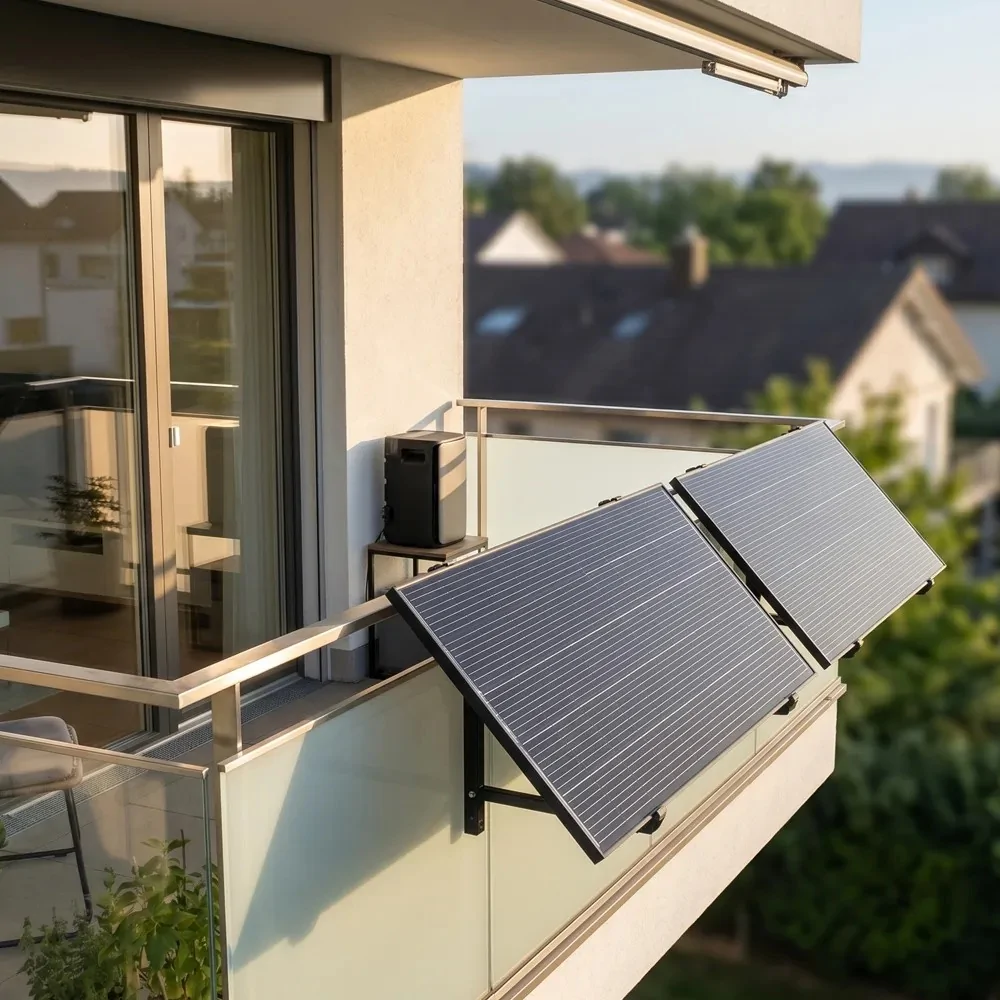
Balcony solar: opening the energy transition to apartment residents

(Reflections from Intersolar 2026)
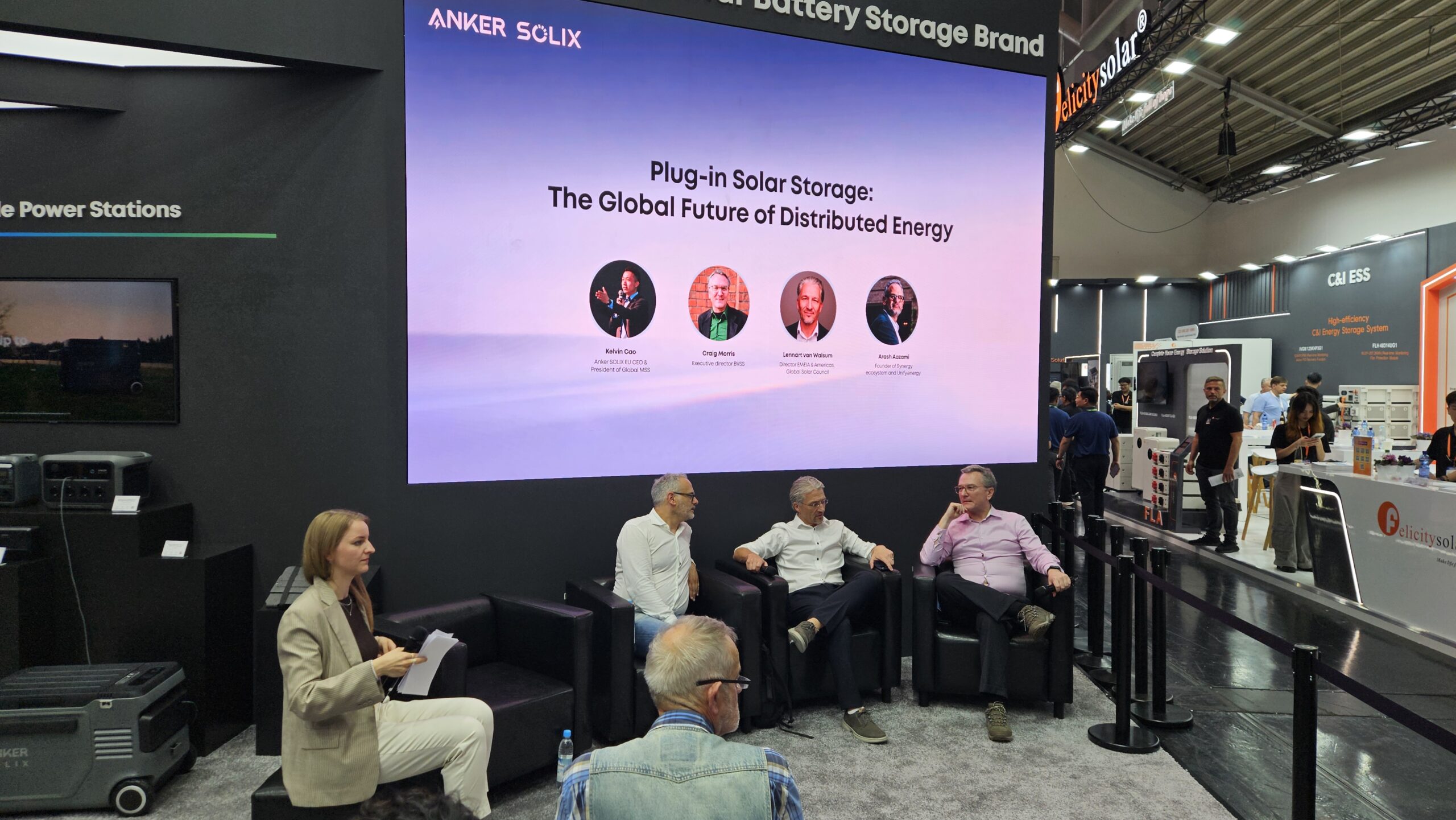
At the Plug-In Solar Conference 2026, held at Intersolar Munich, one message stood out clearly: the next stage of Europes solar transition cannot be designed only for roofs, homeowners and single-family houses. It must also work for balconies, tenants and residents of multi-family apartment buildings.
This is precisely the challenge addressed by SUN BOX, a project financed by the European Climate Initiative (EUKI). The project focuses on plug-in solar and energy storage solutions for multi-apartment buildings, with activities unfolding across Eastern Europe, including Bulgaria, North Macedonia and Lithuania.
Its central concern is practical and social at the same time: how can households that do not own a roof still become active participants in the renewable energy transition?
The scale of this question is enormous. Across Europe, tens of millions of people live in apartment buildings. Many of these buildings are waiting for renovation, and in many cases deep renovation may still be years away.
Why plug-in?
Rooftop solar can be an important solution, but it is not always simple. Homeowners associations need to agree. Roof space may be limited. Administrative procedures can be slow.
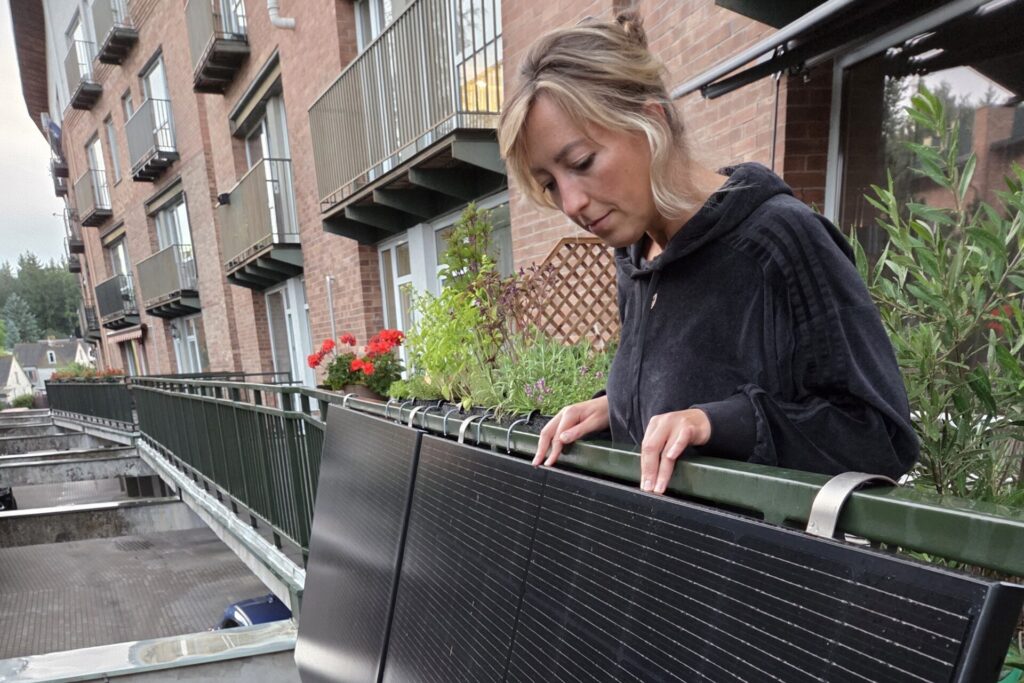
In a typical multi-family building, even a 25 kW rooftop PV system may translate into only 300 - 400 W per flat. By contrast, a single balcony installation can already provide around 800 W or more, and a building with many suitable balconies can host a significant amount of decentralised solar capacity. Our calculations show that 25-30 kW of solar per MFAB can be easily achievable.
This does not mean that balcony solar replaces rooftop PV, deep renovation or energy communities. It means that plug-in solar can become an additional, faster and more empowering route into the energy transition. For residents who cannot wait ten years for a major renovation, who do not yet have a functioning local energy community, or who otherwise remain passive consumers of green electricity, balcony PV offers a more direct way to generate part of their own electricity.
The debate is not new. The 2025 Plug-In Solar Conference (the first of its kind) moved plug-in from a niche debate to a serious European agenda.
In Germany, adapted regulation and standardisation helped create a dynamic market with millions of devices sold and installed. One should also note growing interest in other countries, including Austria, Lithuania, Belgium, France and parts of the United States. For the first time, plug-in solar creates the possibility for virtually every household to generate sustainable electricity, reduce energy costs and contribute to the energy transition.
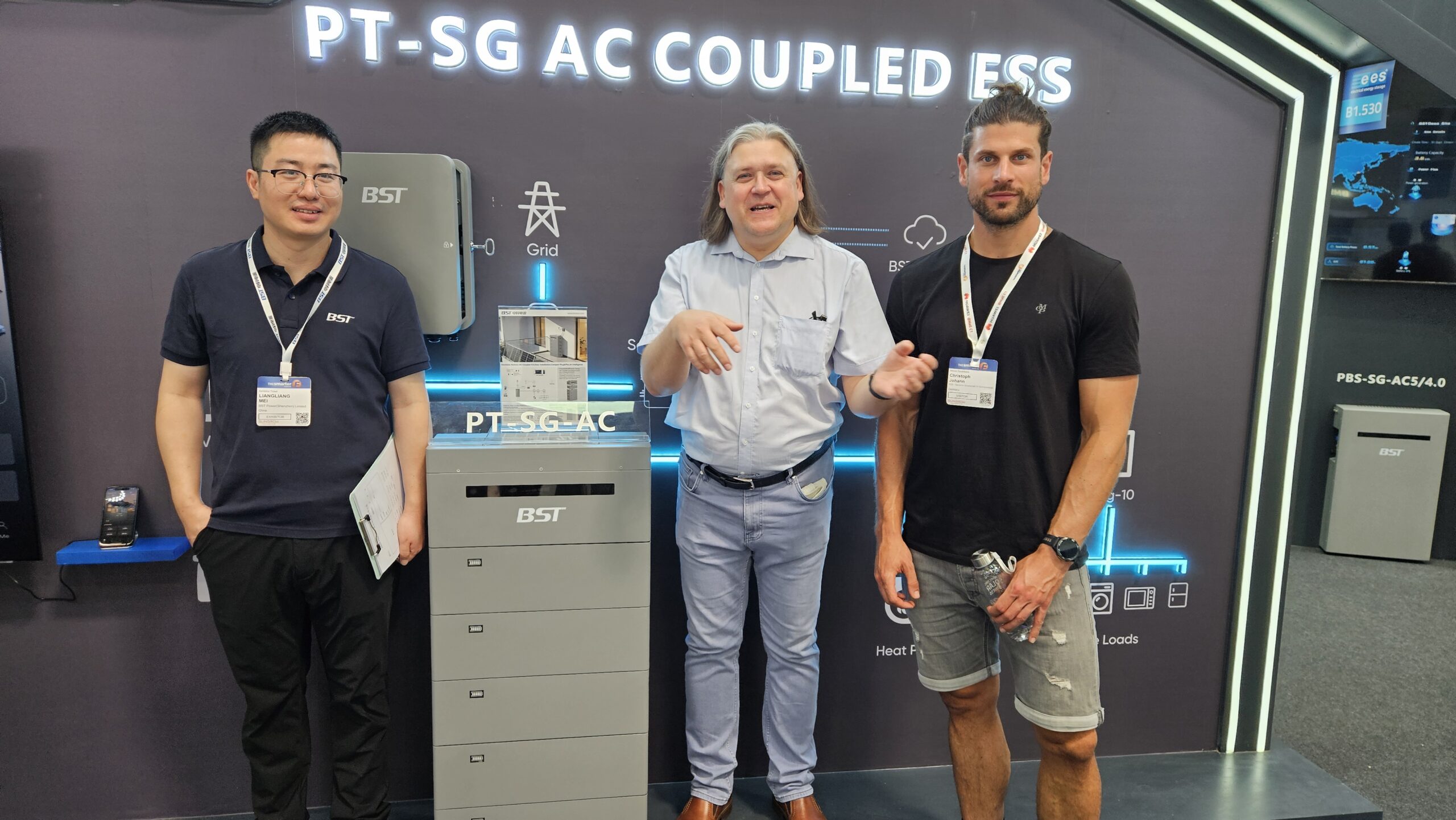
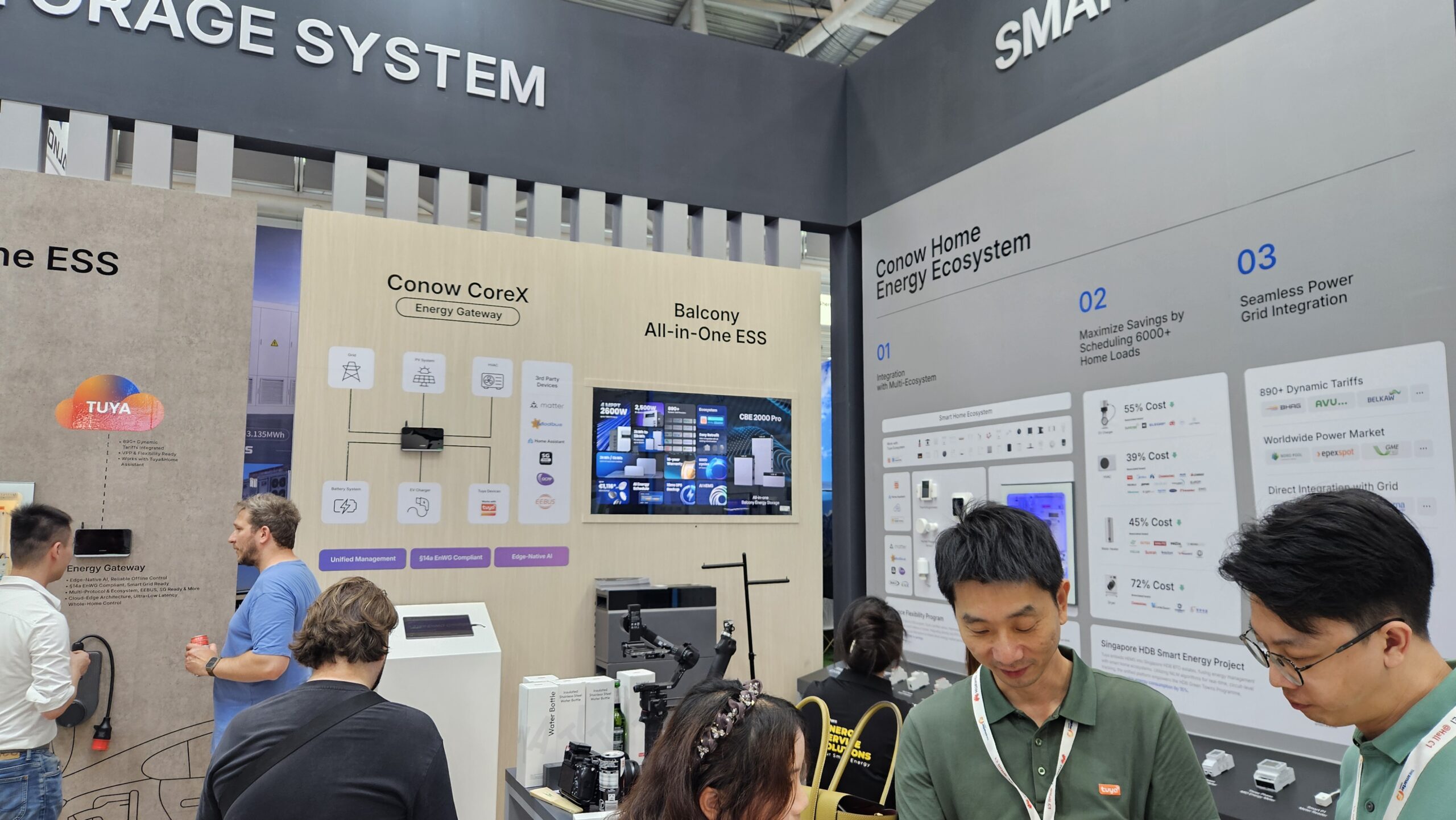
Yet the 2026 discussion, gathering enthusiasts of plug-in solar at the Intersolar in Munich, also made clear that technology is no longer the main bottleneck. At the fair this year, manufacturers showcased a wide range of mature plug-in solar and storage products that could be deployed at scale. In many cases, the products are no longer provided separately. The plug-in facility and storage solutions are combined in a nice single-package offer.
Technology is, finally, ready. The harder question is whether regulation, building management practices and consumer-facing procedures are ready for that deployment.
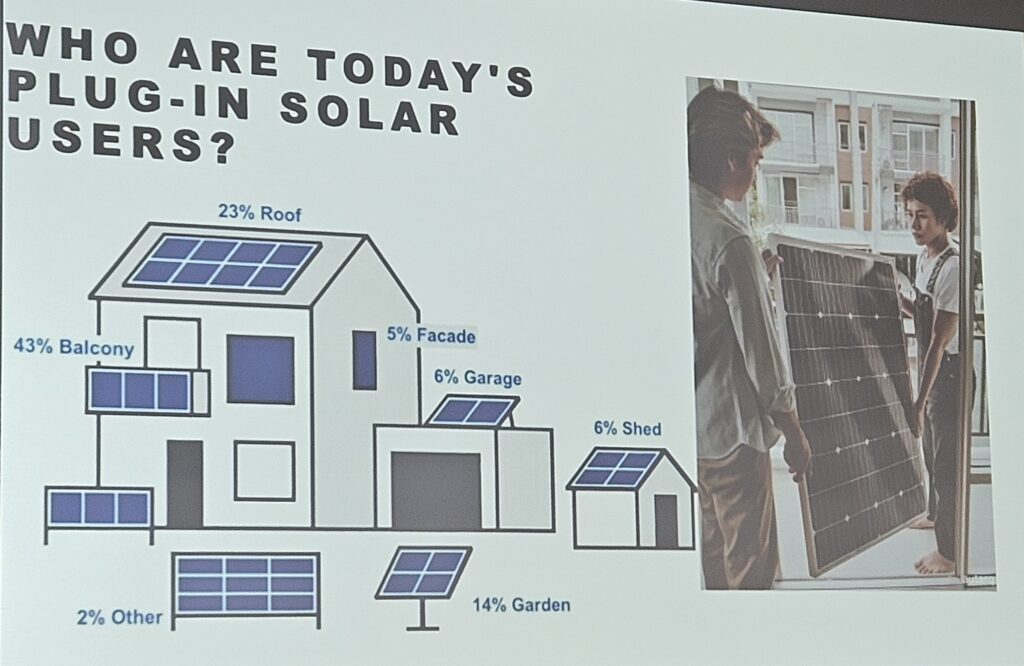
Bottlenecks remain
This is where the realities of multi-apartment buildings become decisive. A plug-in solar system, with or without storage, is technically simple, but its installation takes place in a complex social and legal environment. Metering infrastructure may be outside the apartment. Wi-Fi or Bluetooth connectivity cannot always be assumed. Landlords, homeowners associations and building administrators may need to be involved. In some countries, regulatory uncertainty still discourages residents from installing even non-damaging balcony systems - ie. systems, which are completely removable from the balcony without leaving a trace, if need be.
One real-life example presented during the conference captured the problem. A balcony solar installation was removed after a neighbour complained to the building administrator about a suspicious unidentified object attached to the balcony. The administrator responded with an official letter threatening legal action and demanding removal. The unidentified object was, in fact, a solar panel. The resident removed the system to avoid conflict.
The lesson is sharp. The barrier was not technical feasibility. It was lack of clarity, awareness and established procedures. For SUN BOX, this is exactly where the work begins:bridging technical innovation with everyday housing realities, and developing approaches that are practical, scalable and user-oriented.
In Munich, harmonisation of rules and regulations was identified as key to creating a free and fair market for plug-in solar technology. The conference also highlighted the need for quality and safety standards, simpler administrative processes, grid integration and adequate incentives.
A tool for social inclusion
For Eastern Europe, the topic is particularly relevant. Multi-family apartment buildings form a large part of the housing stock, and many residents face high energy costs, limited control over renovation decisions and slow access to decentralised renewable energy solutions. Balcony solar with storage is not a silver bullet, but it can become a practical entry point into energy democracy: visible, understandable and close to the household.
This is also why plug-in solar should be discussed not only as a technology, but as a consumer and social inclusion issue. "If Europe wants a democratic solar transition, it needs solutions that work for tenants, apartment owners and energy-poor households not only for those who already own a detached house and a suitable roof", said Kęstutis Kupšys, Vice-President of the Lithuanian Consumers Alliance, one of the SUN BOX consortium partners.
The Plug-In Solar Conference 2026 showed that momentum is building. The technology exists, and the demand grows. Even political attention is increasing. The next step is to make balcony solar work in the places where many Europeans actually live: existing multi-apartment buildings, with real administrators, real neighbours, real electricity systems and real legal uncertainty. Adding storage leads to more benefits; hence, it should be encouraged too.
SUN BOX takes this challenge seriously. By combining plug-in solar, storage, consumer engagement and practical work in multi-family housing, the project contributes to a more inclusive and decentralised energy transition. Balcony solar is not just about adding panels to railings; it is about opening a new door into the renewable energy transition for households that have too often been left outside.
**
Author: Kęstutis Kupšys, Vice-President of the Lithuanian Consumers Alliance, and Alternate Member of the European Economic and Social Committee, Contact: Kestutis.Kupsys@lvoa.lt